
Choosing the right tooth replacement can feel overwhelming. Whether you have lost one tooth or many, the options matter. Understanding full vs. partial vs. implant dentures — which suits your smile best in Irvine — helps you make a confident, informed decision. At Irvine Smiles Dental, Dr. Jack Chieh-Hao Chiang guides patients through every option with care and clarity.
This article breaks down each denture type. We cover who qualifies, how the process works, and what daily life looks like with each solution. By the end, you will know which path aligns with your needs.
What Are Full Dentures and Who Are They Best For?
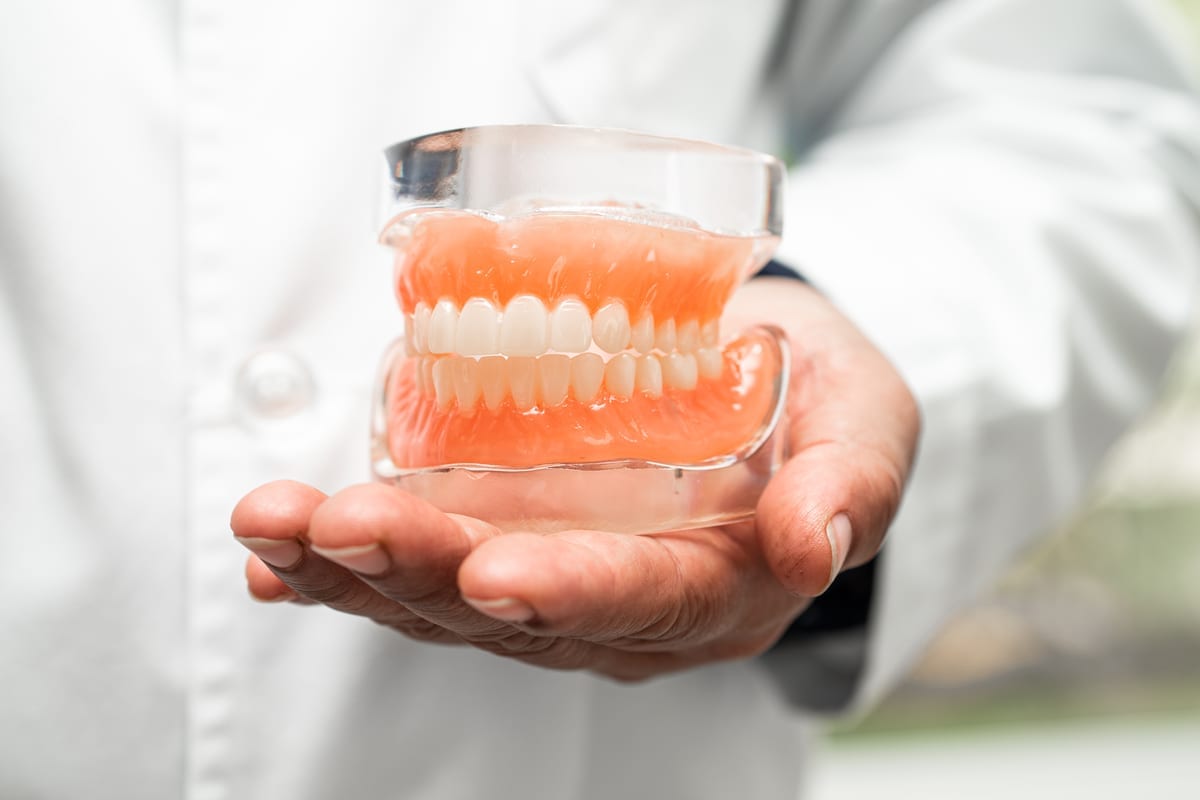
Full dentures — also called complete dentures — replace an entire arch of missing teeth. They sit on the gum line and rely on natural suction or adhesive for stability. They are removable, meaning you take them out at night for cleaning.
Full dentures suit patients who have lost all teeth in the upper jaw, lower jaw, or both. They are also appropriate when remaining teeth are too damaged or decayed to save. Many patients in Irvine choose full dentures as a cost-effective, non-surgical solution.
Here is what the full denture process typically involves:
- Initial examination and impressions of your gum ridge
- Custom fabrication of your denture in a dental lab
- Fitting appointments to adjust comfort and bite
- Follow-up visits as gums heal and reshape over time
One honest consideration — full dentures can shift during eating or speaking. Bone loss in the jaw may also progress without tooth roots to stimulate it. Dr. Chiang discusses these realities openly so you know exactly what to expect.
How Partial Dentures Work and Who Should Consider Them
Partial dentures fill gaps left by several missing teeth. They attach to remaining natural teeth using metal clasps or precision attachments. Like full dentures, they are removable for easy cleaning.
Partials are ideal when you still have healthy natural teeth remaining. They preserve your existing teeth by preventing them from shifting into empty spaces. For patients in Irvine who are not ready for implants or cannot undergo surgery, partials offer a practical middle ground.
Partial dentures also complement other dental work. If you have existing crowns or bridges, your dentist designs the partial to integrate with your current restoration. This coordination keeps your bite balanced and your smile uniform.
Key advantages of partial dentures include:
- More affordable than implant-based solutions
- No surgery or healing period required
- Preserves surrounding natural teeth
- Relatively quick turnaround from consultation to placement
- Easily adjusted or relined as your mouth changes
The main limitation is stability. Partials can feel less secure than fixed solutions, especially when biting into firmer foods. However, for many patients they provide excellent function and aesthetics at a manageable investment.
Implant-Supported Dentures: The Full vs. Partial vs. Implant Dentures Comparison in Irvine
Implant-supported dentures combine the coverage of dentures with the stability of dental implants. Small titanium posts are placed into the jawbone. The denture then snaps or locks onto these implants for a secure fit.
This option suits patients who want maximum stability without individual implants for every missing tooth. It is especially popular for patients replacing a full arch. Candidates need adequate bone density and good overall health to support implant placement.
The process involves more steps than traditional dentures:
- Comprehensive exam including 3D imaging to assess bone volume
- Surgical placement of two to six implants per arch
- A healing period of several months for osseointegration
- Fabrication and attachment of the final denture to the implants
Implant dentures do not slip or move during meals or conversation. They also stimulate the jawbone, slowing the bone loss that often follows tooth extraction. Patients consistently report greater confidence and comfort compared to traditional options.
It is worth noting that implant dentistry connects naturally with broader smile goals. If you are also curious about enhancing your smile’s appearance, explore Cosmetic Dentistry Irvine options available at our practice. Implant dentures can be paired with cosmetic work for a truly complete transformation.
Side-by-Side: Choosing the Right Denture for Your Smile in Irvine
Every patient’s situation is unique. Comparing these three solutions side by side helps clarify the decision. Here is a quick reference to guide your thinking before your consultation.
Full Dentures: Best for patients with complete tooth loss who want a non-surgical, more affordable solution. Requires adjustment time and regular relining as gum shape changes.
Partial Dentures: Best for patients with several missing teeth but healthy remaining teeth. Affordable and non-surgical, with a shorter treatment timeline than implants.
Implant-Supported Dentures: Best for patients seeking permanent stability and long-term bone health. Requires surgery and a longer treatment timeline, but delivers superior function and confidence.
Your overall oral health also influences this choice. For example, untreated decay or infection must be addressed first. In some cases, patients may need a Root Canal Obturation Methods For Treatment Success Irvine procedure to save a tooth before deciding whether a partial or full solution is appropriate.
Dr. Chiang takes time to review your dental history, bone structure, lifestyle, and goals. No single answer fits every patient. The right denture is the one designed around your specific mouth and life.
What to Expect at Irvine Smiles Dental
Your journey begins with a thorough consultation. Dr. Chiang and the team assess your oral health with digital X-rays and a full clinical exam. You discuss your goals, concerns, and timeline openly — no pressure, no rush.
From there, a personalized treatment plan is created. Every step is explained before it happens. You know what each appointment involves and why it matters.
Irvine patients appreciate the practice’s patient-first philosophy. Education is at the center of every visit. Whether you choose full dentures, partials, or implant-supported options, the team supports you throughout the entire process.
If you are ready to explore your options and find the solution that suits your smile, Book Now to schedule your appointment with our team.
Frequently Asked Questions
How long does it take to get dentures in Irvine?
Traditional full or partial dentures typically take four to eight weeks from impressions to final placement. Implant-supported dentures take longer — often four to six months — due to the surgical healing phase. Dr. Chiang provides a specific timeline during your consultation based on your individual treatment plan.
Are implant dentures removable?
Some implant dentures are removable, snapping onto implants for daily cleaning. Others are fixed and only removed by a dentist. Dr. Chiang discusses both styles and recommends the version that best suits your lifestyle and oral health needs.
Will dentures affect how I eat and speak?
There is an adjustment period with any new denture. Most patients adapt within a few weeks. Implant-supported dentures offer the most natural eating and speaking experience. Full and partial dentures may require some dietary modifications, particularly with harder or sticky foods.
How do I care for my dentures?
Remove and rinse dentures after eating. Brush them daily with a soft brush and non-abrasive denture cleaner. Soak them overnight in a denture solution. For implant-supported dentures, follow the specific hygiene instructions provided by Dr. Chiang to keep both the denture and the implant sites clean.
Can I get dentures if I have bone loss in my jaw?
Yes, but bone loss affects your options. Significant bone loss may require a bone graft before implants can be placed. Traditional full dentures do not require a minimum bone level but may fit less securely over time as the ridge continues to shrink. Dr. Chiang evaluates bone volume with imaging and recommends the safest, most effective path forward.