
There’s a quiet wisdom in listening to your body. Just as a community looks out for one another, your oral health sends signals when something isn’t right. Some signs are subtle, easy to overlook in the rush of daily life. But paying attention—early and calmly—can make all the difference.
Oral cancer is one of those conditions where early awareness can lead to better outcomes. As a trusted Irvine Dentist, part of our role is to guide you—not with fear, but with clarity, reassurance, and steady care.
Let’s walk through the signs together so you know what to watch for and when to take action.
Understanding Oral Cancer in Everyday Terms
Oral cancer refers to abnormal cell growth in areas like the lips, tongue, cheeks, gums, or throat. It can develop quietly, without pain at first, which is why regular dental visits matter.
In a place like Irvine—where life moves fast and people stay active—it’s easy to miss early symptoms. That’s why awareness is your first layer of protection.
Early Signs You Should Never Ignore
Not every change means something serious. But when certain symptoms linger, they deserve attention.
1. Persistent Mouth Sores
A sore that doesn’t heal within two weeks is one of the most common warning signs.
- May appear as a small ulcer or raw patch
- Often painless in early stages
- Can occur on the tongue, gums, or inner cheeks
When to act: If it lingers beyond 10–14 days, schedule an exam.
2. Red or White Patches
Changes in color inside your mouth can signal abnormal tissue changes.
- White patches (leukoplakia)
- Red patches (erythroplakia)
- Mixed red-and-white areas
These patches are not always painful, but they are important markers.
3. Unexplained Lumps or Thickening
You might feel a lump in your cheek, jaw, or neck.
- Could feel like swelling or firmness
- May interfere with chewing or speaking
- Sometimes painless
A Dentist Irvine patients trust will often check these areas during routine exams.
4. Difficulty Swallowing or Speaking
If everyday actions begin to feel different, your body may be signaling change.
- Feeling like something is stuck in your throat
- Pain or discomfort when swallowing
- Changes in speech clarity
These symptoms may develop gradually, making them easy to ignore.
5. Numbness or Persistent Pain
Unusual sensations should always be taken seriously.
- Numbness in the tongue or lips
- Ongoing pain without a clear cause
- Sensitivity that doesn’t improve
Pain is not always present in early stages—but when it is, it’s worth checking.
6. Loose Teeth Without Dental Cause
If teeth feel loose without gum disease or injury, it may be related to underlying bone or tissue changes.
- Shifting teeth alignment
- Difficulty wearing dentures
- Jaw discomfort
Who Is at Higher Risk?
Oral cancer doesn’t affect everyone equally. Some factors increase risk:
- Tobacco use (smoking or chewing)
- Alcohol consumption
- HPV (Human Papillomavirus) infection
- Prolonged sun exposure (for lip cancer)
- Age over 40
In Irvine’s health-conscious community, many patients are reducing these risks—but awareness still matters for everyone.
Why Early Detection Matters
Think of early detection like catching a small spark before it becomes a wildfire.
When found early:
- Treatment is less invasive
- Recovery rates are significantly higher
- Quality of life is better preserved
Routine dental visits are not just about clean teeth—they’re about whole-body wellness.
What Happens During an Oral Cancer Screening?
Many patients don’t realize how simple and quick a screening is.
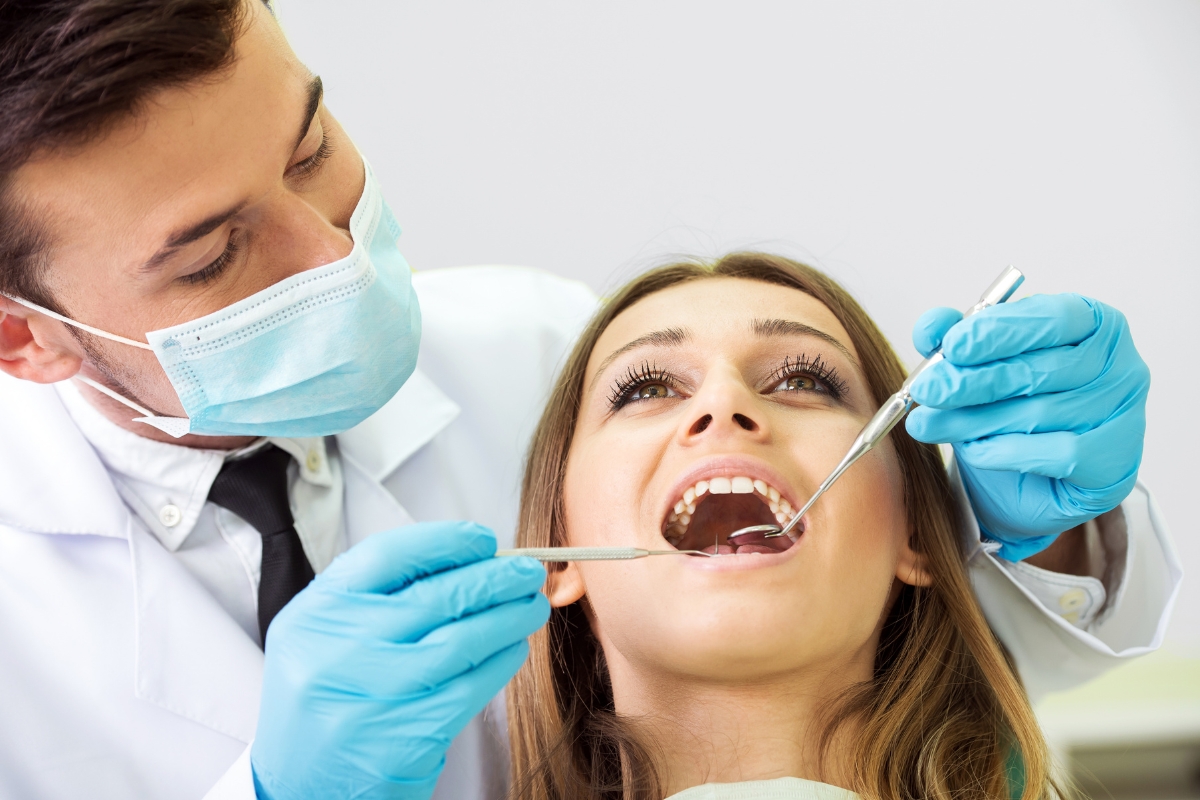
During a regular visit, your dentist may:
- Examine your lips, tongue, and cheeks
- Check for unusual textures or discoloration
- Feel for lumps in the jaw and neck
- Ask about any symptoms you’ve noticed
It takes just a few minutes—but offers lasting peace of mind.
Source: Teeth Talk Girl
Simple Habits That Support Prevention
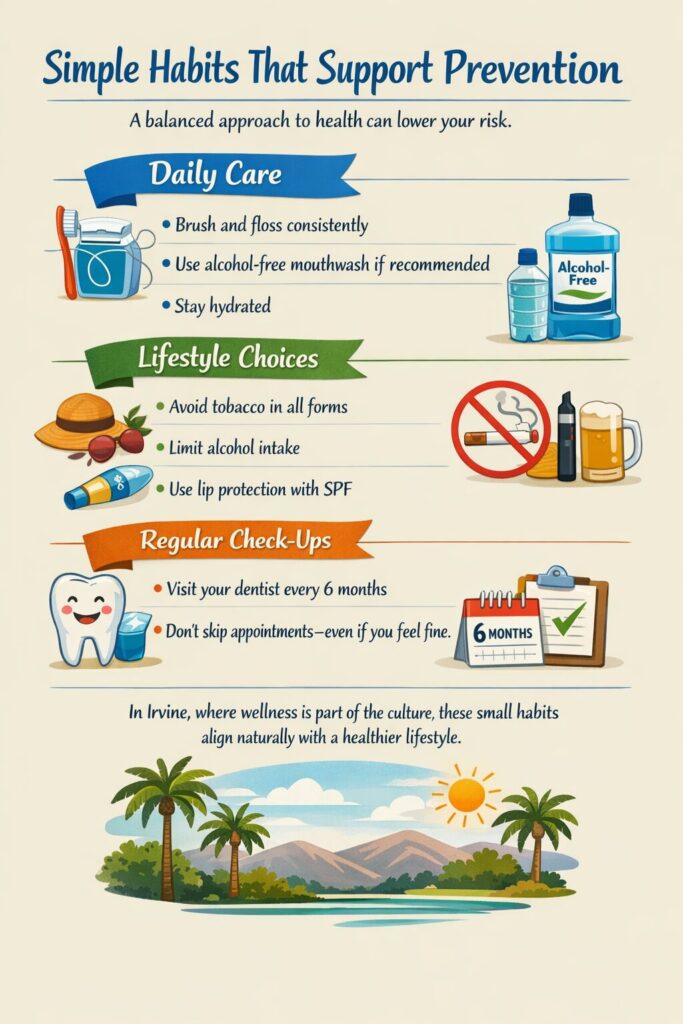
A balanced approach to health can lower your risk.
Daily care
- Brush and floss consistently
- Use alcohol-free mouthwash if recommended
- Stay hydrated
Lifestyle choices
- Avoid tobacco in all forms
- Limit alcohol intake
- Use lip protection with SPF
Regular check-ups
- Visit your dentist every 6 months
- Don’t skip appointments—even if you feel fine
In Irvine, where wellness is part of the culture, these small habits align naturally with a healthier lifestyle.
When Should You Book an Appointment?
Trust your instincts. If something feels off, it’s worth checking.
Schedule a visit if you notice:
- A sore that won’t heal
- Persistent pain or numbness
- Difficulty swallowing
- Unusual patches or lumps
Even if it turns out to be nothing serious, you gain clarity—and that peace of mind matters.
Common Questions Patients Often Ask
Is oral cancer always painful?
No. Early stages are often painless, which is why visual and physical checks are so important.
Can young people get oral cancer?
Yes, especially with HPV-related cases. While risk increases with age, it’s not limited to older adults.
Are all mouth sores dangerous?
Most are harmless. However, sores lasting longer than two weeks should be evaluated.
How often should I get screened?
Typically, screenings are included in routine dental visits. If you’re at higher risk, your dentist may recommend more frequent checks.
Does a healthy lifestyle eliminate risk?
It reduces risk but doesn’t remove it entirely. Regular exams remain essential.
A Thoughtful Approach to Your Oral Health
Health isn’t just about reacting—it’s about staying connected to your body’s signals. Much like a community thrives on awareness and care, your well-being grows stronger when you pay attention and act early.
In Irvine, where families, professionals, and individuals value long-term health, taking a few moments to check in with your oral health can have lasting benefits.
A Thought to Carry With You
Across many traditions, true health is seen as a quiet balance—between awareness and action, between noticing and responding with care. Your mouth is not separate from your body; it reflects and supports your overall well-being.
When you notice changes, give them your attention. When something doesn’t feel right, allow yourself the space to seek guidance without hesitation.
At Irvine Smiles Dental, care is more than a procedure—it is a partnership built on trust, compassion, and a commitment to your long-term health.
Schedule your visit today and take a mindful step toward lasting well-being.