


Have you ever looked in the mirror and noticed your teeth look shorter than they used to? Many assume it’s just part of getting older. In reality, a “short tooth” smile usually develops from grinding or clenching over time. It can occur in your sleep or when you are stressed out during the day. Gradually, the edges of the teeth flatten out, small chips form, and the smile starts to look increasingly uneven. Many people in Irvine only notice this change when they look back at old photos or see themselves smiling in the mirror.
Everyday habits like having a morning coffee during walks at Tyndall Building or studying all night without realizing it can also be potential causes of teeth grinding. The first step to a short-tooth smile and to restoring balance that protects long-term oral health is understanding the reasons behind your symptoms. In this blog, we will discuss how porcelain veneers can fix short teeth and related issues.
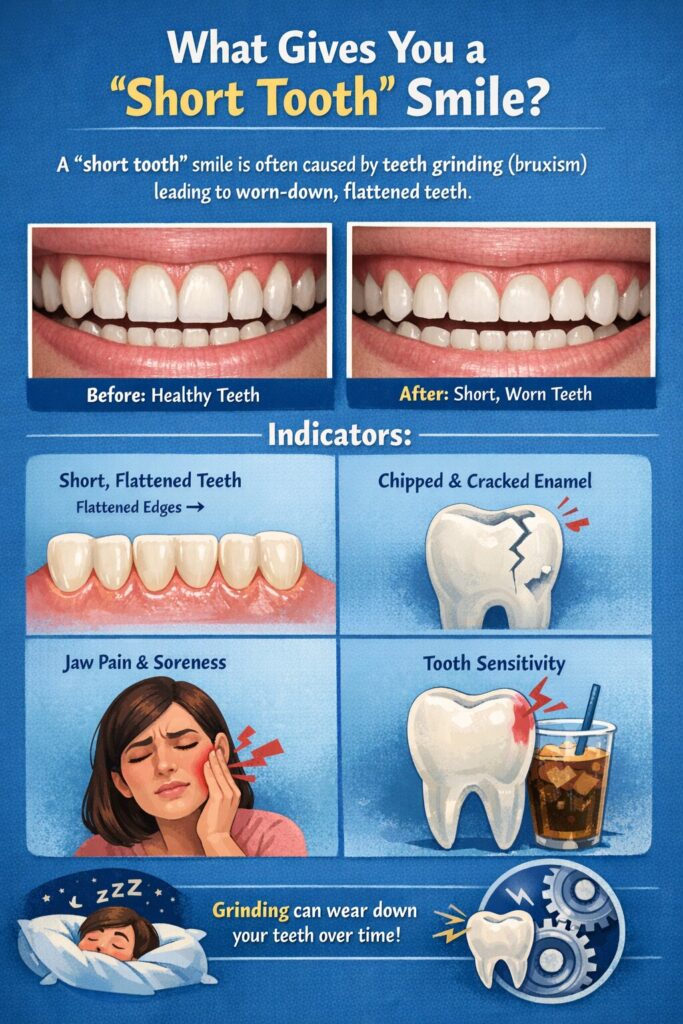
What Gives You a “Short Tooth” Smile?
A short tooth usually forms when your enamel wears down over time. The teeth level off, and their edges are flat rather than slightly rounded. The most common cause is grinding, or bruxism.
Indicators that grinding might be damaging your teeth include:
- Teeth that look shorter than they used to be
- Flattened biting edges
- Microfractures or chipping of enamel
- Jaw soreness in the morning
- Increased tooth sensitivity
Grinding exerts continuous pressure on the teeth. Over time, that pressure wears away at the enamel and alters the way your teeth come together when you bite.
Busy people often fall into this habit without noticing. Commuting on the I-405, finalizing work projects, or burning the midnight oil studying for exams can cause people to clench during sleep.
Why Does Teeth Grinding Damage Enamel?
Although enamel is the toughest substance in the body, it is not invincible. When people grind their teeth, the top teeth are pushed against the ones below over and over. That friction gradually wears away microscopic layers of enamel. When enamel is worn away, the teeth lose their natural shape and length.
Grinding can also lead to:
- Uneven bite pressure
- Small fractures in enamel
- Increased tooth sensitivity
- Changes in facial balance
Over time, the smile can look older because worn-down teeth make the teeth appear shorter across the entire row.
Porcelain Veneers for Restoring Worn-Down Teeth
Porcelain veneers can help regain their original proportions when teeth have been ground down and lost their natural height.
Thin, porcelain coverings are carefully crafted by a cosmetic dentist and bonded to the front of the teeth. These caps rebuild the visible portion of your tooth and return its shape.
Patients seeking veneers in Irvine often do so for cosmetic reasons, but they can also seek this treatment to improve structural symmetry. Veneers help make the smile appear more even and harmonious by restoring the natural length of the teeth.
Porcelain aims to mimic natural enamel. It is light-reflective like natural teeth, allowing for a more natural smile.
Eyeing the absent genetic markers is not just cosmetic. Restoring worn teeth also protects them from further damage.
Benefits of Restoring Tooth Length
Increasing the length of short teeth can address both form and function. Some key benefits include:
- Replacing the natural height of lost teeth
- Improving bite alignment
- Shielding delicate enamel from further harm
- Improving symmetry of the smile
- Reducing visible signs of grinding
When all the teeth are aligned again, you can chew and speak more comfortably day-to-day. Patients often observe minor changes in overall facial appearance after treatment. Proportionate teeth also support the lips and balance the smile.
Porcelain Veneers Process
For the restoration of the worn teeth with veneers, a few meticulous steps are taken.
- Consultation and Evaluation
The procedure begins by consulting a cosmetic dentist to check the teeth and rule out any symptoms of grinding. Digital imaging can be used to assess the extent of enamel loss. This phase also weighs whether veneers are the correct way to restore tooth structure.
- Smile Planning
Each veneer is designed to suit the natural proportions of the smile. The dentist considers:
- Tooth length
- Bite alignment
- Facial structure
- Overall symmetry
The aim is to return balance and a natural look.
- Tooth Preparation
A small amount of enamel may be prepared to ensure proper adherence of the veneer. It allows the final product to fit well and be aesthetically pleasing.
- Veneer Placement
These custom veneers are then bonded to the teeth with special dental adhesives. The dentist carefully examines the bite to ensure the alignment is correct. This step gives the worn teeth their final shape.
Source: Teeth Talk Girl
Protecting Teeth After Grinding Damage
Replacing missing teeth is only half the solution. Preventing future grinding damage is equally important for your oral health.
Common recommendations may include:
- Custom night guard to be worn at night
- Reducing stress before bedtime
- Not chewing ice or hard objects
- Maintaining regular dental checkups
These measures protect both the natural teeth and restorations.
Note: Residents who frequently cycle outdoors along the Jeffrey Open Space Trail or make weekend visits to Crystal Cove find that reducing stress and physical activity also reduces clenching habits.
Modern Smile Restoration
Cosmetic dental advances have enabled extremely precise reconstruction of worn teeth. Porcelain veneers are designed to mimic the appearance of natural enamel and restore lost structure from grinding. The treatment aims to restore the visible portion of the teeth while preserving the smile’s aesthetics.
Many people who were once self-conscious about worn teeth find that restoring their tooth length dramatically improves their confidence when speaking, laughing, and having photos taken. Small changes in your tooth shape can make big differences.
A Balanced Smile for the Future
Teeth grinding can silently reshape a smile over time. What begins as light enamel erosion can gradually give the teeth a slightly shorter appearance.
Using a variety of contemporary techniques and materials, we can get those worn edges back while maintaining the natural appearance of the smile.
When it comes to veneers in Irvine, it’s not only about aesthetics; it’s also about bringing balance, safeguarding teeth, and centralizing long-term oral health.
Taking the Next Step Toward Restoring Your Smile
The function of your teeth can be affected by a short tooth smile due to grinding. Porcelain veneers may be used to restore the teeth damaged by grinding while preserving a natural appearance. It restores the natural length of teeth, thus bringing balance, comfort, and confidence to everyday interactions.
At Irvine Smiles Dental, our team of professionals assesses instances of enamel wear or erosion and prepares a plan to restore your smile’s proportions. If you feel your teeth have started to look shorter or more worn, do not hesitate; call us today and book an appointment. We are ready to assist you with restoring your smile and protecting it going forward in the right way.
Questions People Ask About Porcelain Veneers
What causes teeth to look shorter over time?
Teeth often appear shorter because of grinding or clenching. These habits slowly wear down enamel along the biting edges. Over time, repeated pressure flattens the teeth and changes their shape. This gradual enamel loss can create the appearance of a shortened smile.
Can teeth grinding happen without someone noticing?
Yes, many people grind their teeth during sleep without realizing it. Morning jaw soreness, tooth sensitivity, or worn edges may be the first signs. Stress and nighttime clenching are common triggers, which is why some people only discover the issue during routine dental examinations.
Are porcelain veneers only used for cosmetic improvements?
Porcelain veneers often improve appearance, but they can also restore teeth damaged by grinding. When enamel has worn down, veneers rebuild the tooth’s visible surface. This restoration improves tooth shape, supports better bite balance, and protects the underlying structure.
How do veneers help restore worn teeth?
Veneers cover the front surface of teeth and rebuild missing enamel. They restore the natural height and contour of teeth that have been worn down. This allows the smile to appear balanced again while also helping distribute bite pressure more evenly.
Can grinding damage continue after veneers are placed?
Yes, grinding can still occur after veneers are placed. That is why protective measures such as night guards are often recommended. These guards reduce pressure on the teeth during sleep and help preserve both natural enamel and restorations from further wear.
When should someone seek help for teeth grinding?
If you notice flattened teeth, jaw soreness, or increased sensitivity, it may be time to seek evaluation. A cosmetic dentist can assess signs of grinding and recommend appropriate treatment options. Early attention helps prevent further enamel loss and protects the overall health of the smile.