
It often starts quietly—a dull ache that grows sharper as the day fades. By night, tooth pain can feel unbearable, keeping you awake and searching for relief. If you’ve ever experienced this, you’re not alone. Nighttime toothaches are common, and they tend to feel worse when you’re lying down and distractions are minimal.
While visiting an Emergency Dentist Irvine is the best step for proper diagnosis and treatment, there are practical things you can do at home to manage the pain until you can be seen. This guide will help you understand why tooth pain worsens at night, what it might mean, and how to safely ease discomfort before your dental visit.
What Is Nighttime Tooth Pain?
Nighttime tooth pain refers to dental discomfort that intensifies in the evening or while lying down. It can range from mild sensitivity to severe, throbbing pain.
This happens because:
- Blood flow to the head increases when lying down
- There are fewer distractions at night, making pain more noticeable
- Inflammation or infection may worsen over time
Understanding the cause is key to managing symptoms effectively before visiting an Emergency Dentist Irvine.
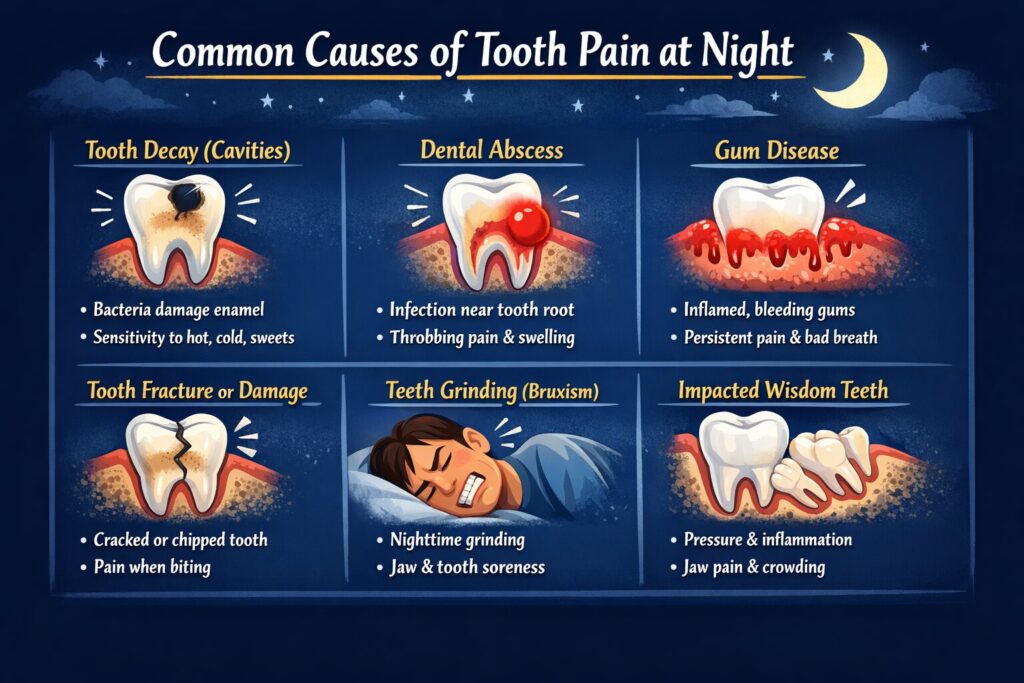
Common Causes of Tooth Pain at Night
Several dental issues can lead to nighttime discomfort. Identifying possible causes can help you respond appropriately:
1. Tooth Decay (Cavities)
- Bacteria damage the enamel and reach deeper layers
- Causes sensitivity to hot, cold, or sweet foods
2. Dental Abscess
- A serious infection near the tooth root or gums
- Often causes throbbing pain, swelling, or fever
3. Gum Disease
- Inflamed or infected gums can lead to persistent pain
- May include bleeding or bad breath
4. Tooth Fracture or Damage
- Cracks or chips expose sensitive inner layers
- Pain may worsen when biting or chewing
5. Teeth Grinding (Bruxism)
- Common during sleep
- Leads to soreness in teeth and jaw muscles
6. Impacted Wisdom Teeth
- Pressure and inflammation can cause significant discomfort
If symptoms feel severe or worsen quickly, seeking an Emergency Dentist Irvine should not be delayed.
Why Addressing Tooth Pain Quickly Matters
Ignoring tooth pain—even if it comes and goes—can lead to more serious complications. Early attention helps:
- Prevent infection from spreading
- Preserve natural teeth
- Reduce the need for complex treatments
- Improve overall oral and general health
Pain is your body’s way of signaling that something needs attention. Acting early makes a significant difference.
Signs You Should See an Emergency Dentist Irvine
While some discomfort can be managed temporarily, certain symptoms require urgent care:
- Severe, persistent pain
- Swelling in the face or jaw
- Fever or general illness
- Difficulty swallowing or breathing
- Pus or discharge around the tooth
- Trauma or knocked-out tooth
If you notice any of these signs, contact an Emergency Dentist Irvine as soon as possible.
What to Do Before Visiting the Dentist
While waiting for your appointment, you can take steps to manage pain safely at home:
Immediate Relief Tips
- Rinse with warm salt water
Helps reduce inflammation and cleans the area - Apply a cold compress
Place it on the outside of your cheek for 15–20 minutes - Use over-the-counter pain relief
Follow dosage instructions carefully - Keep your head elevated
Use extra pillows to reduce pressure and blood flow to the area - Avoid trigger foods
Stay away from very hot, cold, or sugary items
What to Avoid
- Do not place aspirin directly on the tooth or gums
- Avoid chewing on the affected side
- Do not ignore worsening symptoms
These steps are temporary solutions—not replacements for professional care from an Emergency Dentist Irvine.
What to Expect During Your Emergency Visit
Knowing what happens during a dental emergency visit can ease anxiety:
1. Examination
- The dentist evaluates your symptoms
- X-rays may be taken to identify the issue
2. Diagnosis
- The root cause of the pain is identified
3. Treatment
Depending on the condition, treatment may include:
- Filling for cavities
- Root canal for infection
- Tooth extraction (if necessary)
- Antibiotics for infection control
4. Pain Management
- Immediate steps are taken to relieve discomfort
Your dentist will also provide guidance for follow-up care.
Source: MedStar Health
Recovery and Aftercare Tips
After receiving treatment, proper care supports healing and prevents future issues:
- Follow all post-treatment instructions
- Maintain good oral hygiene (gentle brushing and flossing)
- Avoid hard or sticky foods temporarily
- Take prescribed medications as directed
- Attend follow-up appointments
Consistency in care ensures long-term oral health and comfort.
Why Choose Irvine Smiles Dental
When facing dental discomfort, choosing the right care provider matters. At Irvine Smiles Dental in Irvine, CA 92604, the focus is on patient-centered care, timely attention, and clear communication.
Patients benefit from:
- A calm, supportive environment
- Thorough evaluations and transparent explanations
- Modern diagnostic tools
- A commitment to long-term oral health, not just quick fixes
The goal is to help patients feel informed, comfortable, and confident in their care decisions.
Conclusion
Tooth pain at night can be distressing, but you don’t have to navigate it alone. Understanding the cause and taking the right steps can help you manage discomfort until you receive professional care.
If your symptoms persist or worsen, don’t wait. An Emergency Dentist Irvine can provide the timely care you need to protect your oral health and relieve pain effectively.
Schedule your appointment today and take the first step toward lasting relief and peace of mind.
Common Patient Questions
What makes tooth pain worse at night?
When you lie down, increased blood flow to the head can intensify pressure and inflammation, making pain feel stronger.
Can a toothache go away on its own?
Some mild discomfort may fade, but underlying issues like decay or infection usually require treatment.
Is it safe to sleep with tooth pain?
You can try managing it with home remedies, but persistent or severe pain should be evaluated by a dentist as soon as possible.
When should I go to an emergency dentist?
If you have swelling, severe pain, fever, or signs of infection, seek immediate care from an Emergency Dentist Irvine.
What is the fastest way to relieve tooth pain at home?
Rinsing with warm salt water, using a cold compress, and taking over-the-counter pain relievers can help temporarily.
Can stress cause tooth pain at night?
Yes, stress can lead to teeth grinding, which may cause soreness and discomfort during the night.